

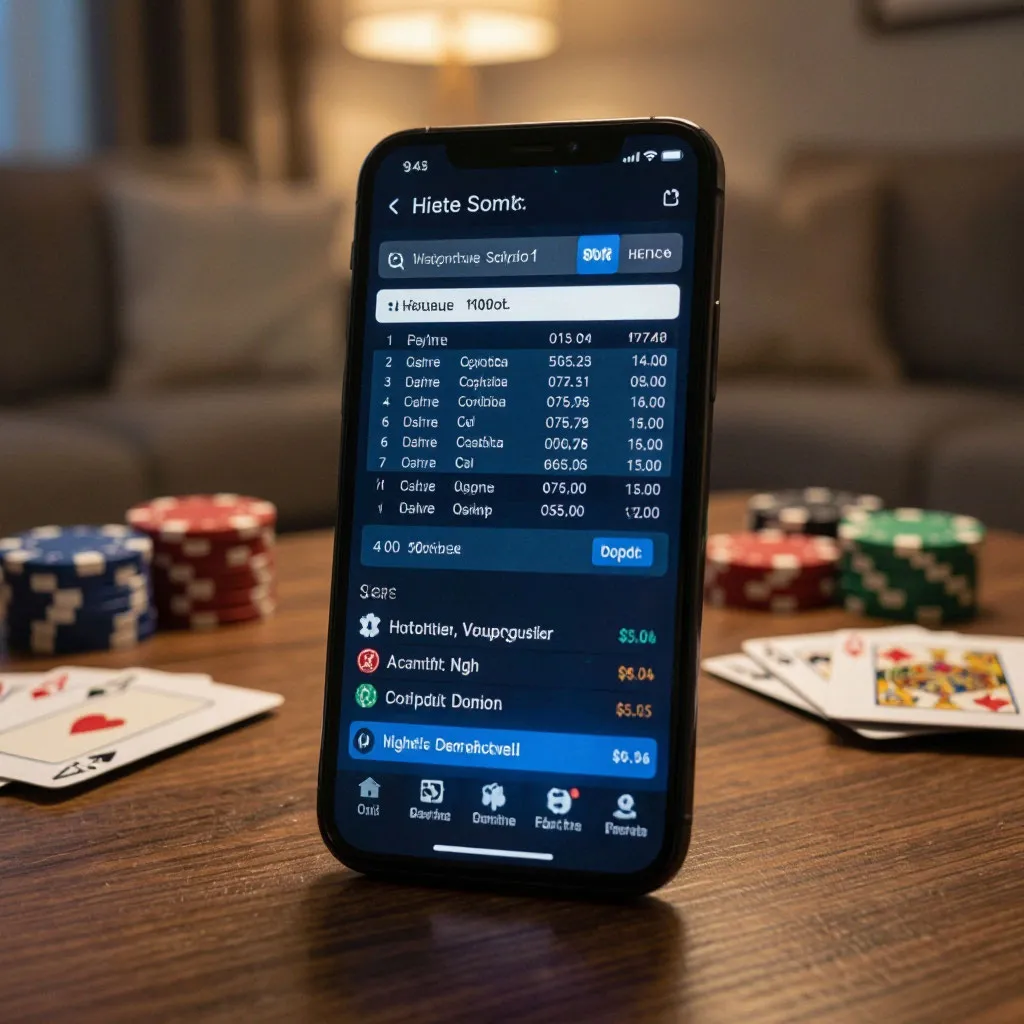
Most players treat their casino account like a wallet: money goes in, money comes out, and what happens in between is a blur of spins and hands. That blur is actually a complete record. Every bet you place, every deposit you make, every bonus you trigger and every payout you receive is logged with a timestamp, and licensed operators are required to keep that history available to you. Few players ever open it, and fewer still know how to read it — yet this log is the single most useful tool for understanding your own play, catching billing errors, and resolving disputes when they arise. Learning to navigate it takes about ten minutes and pays off for the entire life of your account.
Where your gambling history lives
Nearly every licensed casino stores session data in two or three places, and knowing which record answers which question saves a lot of clicking. The locations are broadly consistent across the industry, though the labels vary by site.
- Transaction history sits under your account or wallet section and lists every movement of money: deposits, withdrawals, reversed withdrawals, bonus credits, and adjustments. This is the record for anything involving cash.
- Game history or bet history appears inside the account menu or, sometimes, within each game itself. It logs individual rounds: the game, the time, the stake, the outcome, and the amount won or lost.
- Bonus history tracks every promotion you have claimed, the wagering attached to it, and how much of that wagering remains. Some casinos merge this into the bonus tab; others keep a separate page.
- Session summaries appear on some operators as daily or monthly overviews — net position, total wagered, time played. These are the most useful views for spotting trends, and the easiest to miss.
If any of these sections seems empty or incomplete, the culprit is usually a filter: date ranges default to short windows, and a month of heavy play can hide behind a seven-day view. Widening the range is the first fix whenever history looks wrong.
What each record actually contains
A single row of bet history compresses a lot of information, and reading it fluently is what turns the log from noise into a tool. The columns are broadly standardized across the industry, though names differ slightly between platforms.
| Field | What it shows | Why it matters |
|---|---|---|
| Date and time | Exact timestamp of the round or transaction | Resolves disputes and matches against bank statements |
| Game name and provider | Which title and studio generated the round | Confirms you played what you think you played |
| Bet amount | Stake for that specific round | The base for every calculation about your play |
| Outcome | Win amount or loss, sometimes the game result itself | The raw material for your own win-rate tracking |
| Balance before/after | Your balance at each moment | Makes arithmetic errors and discrepancies visible |
| Transaction ID | Unique reference for the round or payment | The number support will ask for |
The transaction ID is the detail most players overlook, and it is the one that matters most in a dispute. When you contact support about a missing win, a reversed withdrawal, or a mispriced bet, the reference number converts a vague complaint into a specific, verifiable claim — and support teams resolve specific claims dramatically faster.
Checking your session history step by step
The process differs slightly by operator, but the skeleton is identical everywhere. Following the full sequence once means you will never have to figure it out under pressure, which is exactly when most players end up looking for it.
- Open the account menu and find the history or transactions section. It is usually labeled “My account,” “Cashier,” “Wallet,” or “History,” depending on the platform.
- Set your date range deliberately. Choose the period you actually want — a single session, a week, a month — rather than accepting the default filter.
- Switch between tabs to see the full picture. Transactions alone miss the bets; bet history alone misses the deposits. The complete story needs both.
- Open individual rounds for detail. Many platforms expand each row to show the game round ID, the exact cards or spin results, and the bet breakdown.
- Export or screenshot what matters. For anything you might dispute or want to track over time, save a copy — support disputes run on evidence, not memory.
That final step deserves emphasis. Records sometimes become harder to retrieve as accounts age, and taking a screenshot of a significant session — a big win, an unusual bonus outcome, a suspected error — costs nothing and can settle a disagreement months later.
Reconciling history with your bank statement
The most common reason players open transaction history at all is a mismatch: the casino’s records show one number, the bank statement shows another. These mismatches almost always have an explanation, and the explanations follow predictable patterns. Deposits may appear under a processor’s trading name rather than the casino’s brand, which makes statements confusing at first glance. Currencies can convert at rates that differ from what you expected. Failed deposits sometimes leave pending authorizations that later drop off without ever becoming actual charges. And bonuses credited and then forfeited can leave entries that look like losses but are really bookkeeping movements.
When a genuine discrepancy appears — a charge with no matching deposit in the casino’s records, or a withdrawal that shows complete on the site but never arrived — the sequence is always the same: locate the transaction ID on both sides, contact the casino’s support with both references, and let the two payment trails be compared. Card issuers and banks can trace a payment from their end with the date and amount, which is why having the casino’s records at hand makes every such conversation faster.
Using history to understand your own play
Beyond disputes and bookkeeping, the session log is a mirror, and for most players the reflection is more useful than any strategy discussion. The data answers questions that memory answers badly. A few calculations, done once a month, turn scattered numbers into an honest picture.
- Net position per period. Total withdrawals and balance minus total deposits — the number that settles whether a month was good or bad, regardless of how it felt along the way.
- Average session length. Time played, divided by number of sessions. Longer averages than you expected are often the most valuable insight the log offers.
- Win rate by game. Filter by title and compare your outcomes against the published RTP; results far below expectation over hundreds of rounds suggest either bad luck or a game you should reread.
- Bonus profitability. Compare bonuses claimed against wagering completed and outcomes achieved; the pattern over several offers tells you whether bonuses help or hurt your results.
- Stake creep. Watch whether your average bet rises over a session — it does for many players, and the log makes the drift impossible to ignore.
There is no judgment in any of this. The point of reading your own data is the same as the point of reading a fitness tracker: what gets measured gets managed. Players who check their monthly net position tend to make calmer decisions than players who rely on how the last session felt, because memory is a poor accountant — it remembers the big wins vividly and the accumulated small losses not at all.
What your records entitle you to
The history is not just a courtesy; it is a regulatory obligation for licensed operators, and that obligation works in your favor. Under most major licensing regimes, casinos must retain transaction and game records for a defined period — commonly five years or more — and must provide them to you on request. This matters most in disputes: if a game round malfunctions, if a bonus is applied incorrectly, or if a withdrawal vanishes, the operator’s own log is the authoritative evidence, and you are entitled to a copy of it. Regulators’ complaint processes lean heavily on these records, which is why players who arrive with their own screenshots and references fare dramatically better than players who arrive with recollections.
The same entitlement cuts the other way, and that is worth knowing too. Self-exclusion tools, deposit limits, and reality checks — the responsible gambling features most regulators require — all draw on the same data. Your play history feeds the monthly statements and loss summaries that some operators send automatically, and reviewing those summaries is a lightweight version of the analysis above, delivered to your inbox without any effort on your part.
Common problems and their fixes
Even straightforward history systems produce confusion, and the same handful of issues account for nearly all of it. Before assuming a record is lost or wrong, check the usual explanations, because each has a simple solution.
- Missing rounds in game history. Most often a date filter, a game played in a different product (sports or poker rather than casino), or a game from a provider whose rounds the platform logs under a separate section.
- A win showing zero in the log. Some game providers round display amounts; the underlying balance history is authoritative, so compare the balance before and after rather than the displayed win.
- A deposit that never appears. Check for a pending state first, then for a failed authorization on the bank’s side; if neither explains it, the transaction reference from your bank gives support everything they need.
- History gaps after account closure or self-exclusion. Records legally persist even when the account is closed, but player-facing access may not; requesting archived statements from support is the correct route.
- Deleted or expiring data. Some operators limit player-facing history to twelve months while keeping full records internally; requesting older statements is normal and usually granted.
The pattern across all five is consistent: what looks like missing data is almost always data behind a filter, in a different section, or held in an archive. Genuinely lost records are rare at licensed operators, precisely because regulators require them to be kept.
The bottom line
Your casino session history is a complete, timestamped account of everything that happened — every bet, every deposit, every bonus, every payout — and it exists for your use as much as the operator’s. The transaction log answers money questions, the game log answers play questions, and together they settle disputes, catch errors, and reveal patterns that memory smooths over. Check it once a month, screenshot anything significant, keep your transaction references, and read your own numbers the way you would read a bank statement: honestly, without flinching, and with the arithmetic done by the record rather than by memory. The players who benefit most from online casinos are, almost without exception, the ones who treat the history section as a tool rather than a threat.