
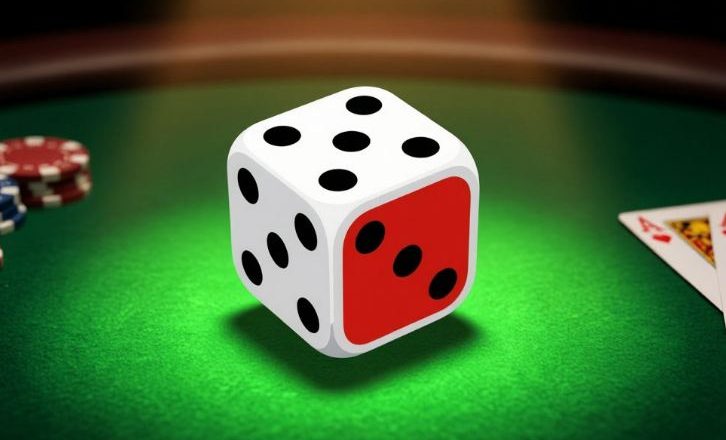
The thunderous roar of a live casino often centers around a single, chaotic table where acrylic red dice bounce off rubber pyramid walls. In a physical venue, craps is the ultimate spectator sport, defined by collective high-fives and shared adrenaline. Transitioning this experience to the screen of a smartphone or computer might seem to strip away that legendary magic, but the digital format offers a massive hidden advantage. Online, you can play at your own speed, take your time to analyze the complex table layout, and make calculated moves without the intense social pressure of a live crowd. For a beginner, mastering this fast-paced game starts with stripping away the visual noise to focus on the mathematical foundation of the game.
The unique rhythm of a craps round
Before you place a single virtual chip, you must understand that a game of craps does not begin and end with one roll of the dice. Instead, the game operates in cycles, with each cycle containing distinct phases that alter the meaning of every number rolled.
The person rolling the dice is known as the shooter. The game always starts with a fresh cycle, beginning with an initial roll that sets the stage for everything that follows.
To fully comprehend how a round behaves from the perspective of a right-way bettor, it is crucial to follow the physical progression of the dice. Understanding each stage of this sequence ensures you know exactly when your money is at risk and how the dealer determines the winning outcome.
- Placing the bet: you place your chips on the designated Pass Line area before the shooter makes the come-out roll.
- Evaluating the come-out roll: if the shooter rolls a seven or eleven, you win immediately at even money, whereas a two, three, or twelve results in an instant loss.
- Establishing the point: if any other number is rolled, that number becomes the point, and the dealer marks it with a physical puck.
- Chasing the target: the shooter continues rolling the dice until they either hit the point number again to secure a win or roll a seven to end the round in a loss.
Following this progression allows you to see how a simple wager can stretch over several rolls of the dice. This longevity is part of what makes the game so engaging, as a single bet can remain active for a long time, providing excellent value for your money.
The pillars of basic betting
At first glance, the felt layout of an online craps table looks like an intimidating matrix of numbers, labels, and betting boxes. However, over ninety percent of that layout consists of high-risk traps designed to exploit inexperienced players. The smart way to approach the table is to focus almost exclusively on two foundational wagers: the Pass Line and the Don’t Pass line.
The Pass Line is the standard “right-way” wager, where you are effectively rooting for the shooter to succeed. Conversely, the Don’t Pass line is the “wrong-way” wager, where you are betting that the shooter will fail by rolling a seven before hitting their point.
While both options serve as the entry point for almost every strategy, their mathematical realities and emotional dynamics are completely opposite. Comparing these two primary choices side-by-side helps clarify which option aligns better with your personal risk tolerance and playing style.
| Feature | Pass Line bet | Don’t Pass bet |
|---|---|---|
| Betting alignment | Betting with the shooter | Betting against the shooter |
| Come-out roll win | Rolling a 7 or 11 | Rolling a 2 or 3 |
| Come-out roll loss | Rolling a 2, 3, or 12 | Rolling a 7 or 11 |
| House edge | 1.41% | 1.36% |
| Emotional vibe | Socially positive | Socially isolating |
| Point phase win | Hitting the point before a 7 | Hitting a 7 before the point |
Analyzing these details reveals that the wrong-way bet actually carries a slightly lower house advantage, making it a mathematically superior option. However, in physical casinos, playing this way means you are winning when the rest of the table is losing, which can create a tense social atmosphere. Fortunately, when playing online against a computer program, this social friction disappears completely, allowing you to choose the best mathematical option with total peace of mind.
Expensive pitfalls to avoid
Once you get comfortable with the basic line bets, the temptation to explore the rest of the layout can grow. This is where most beginners make critical errors, lured by the flashing promises of high payouts printed directly on the digital table.
These specialized options are known as single-roll wagers or proposition bets, and they are located in the center of the table layout. They offer quick excitement but carry some of the worst odds in the entire casino landscape.
The visual layout of the table is intentionally designed to distract you with colorful boxes and tempting payouts that scream for attention. Steering clear of these specific wagers is the most effective way to protect your budget and enjoy a sustainable session.
- Any seven: this wager pays out if the very next roll is a seven, but the house edge is a staggering sixteen point sixty-seven percent, making it one of the worst bets in the entire casino.
- Hardways: betting that a number like four, six, eight, or ten will be rolled as doubles before a seven or an easyway is highly volatile and carries a house edge of over nine percent.
- The field: while this single-roll wager covering several numbers looks highly attractive, the mathematical advantage of the casino sits at over five percent, which quickly drains your funds.
- Big six and big eight: these options pay even money when a six or eight is rolled before a seven, but they are exact duplicates of the place bets which offer much better payouts for the same mathematical risk.
By avoiding these high-house-edge traps, you ensure that your money remains focused on the wagers that give you a fair chance to win. The flashy payouts of fifteen-to-one or thirty-to-one are statistical illusions designed to exploit a player’s desire for a quick, massive return.
Leveraging the free odds advantage
If you want to truly elevate your gameplay and reduce the casino’s advantage to almost nothing, you must learn to use the odds bet. This is a unique option that is not actually marked on the physical or digital layout of the table, making it a hidden secret for many novices.
Once a point is established during a Pass Line or Don’t Pass round, you are allowed to place an additional wager directly behind your original chips. This extra wager is paid out at true mathematical odds, meaning the casino has absolutely zero statistical advantage on this portion of your money.
By keeping your initial line bet small and backing it up with the maximum allowable odds bet, you can dilute the overall house edge of your table session to less than half a percent. It is the closest thing to a fair game you will ever find on a virtual casino floor, and utilizing it is the mark of a truly smart craps player.