
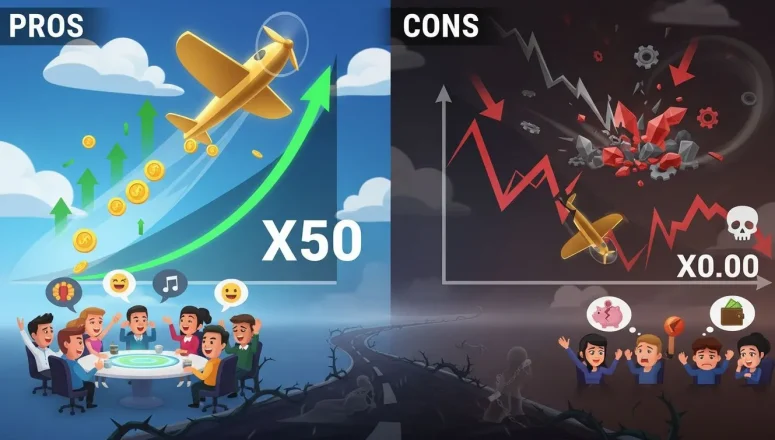
In the world of online gaming and gambling, the game Aviator has gained popularity as a fast-paced, thrill-driven option promising quick wins and an adrenaline rush. But before diving in — especially with real money — it’s essential to understand not only what makes Aviator appealing, but also the potential pitfalls and long-term implications. This article offers a structured, in-depth look at the advantages and disadvantages of playing Aviator, and outlines the possible short-term and enduring risks for players. The aim is to help you make a more informed decision — whether you treat it as light entertainment or a serious gamble.
Potential Benefits of Playing Aviator
Playing Aviator can deliver several immediate attractions that draw in new players — and for some, these benefits are genuinely compelling. First and foremost, the game offers simplicity and accessibility: there’s no need for deep knowledge of complex rules, poker hands, sports odds, or betting strategies. Players usually just pick a bet amount, watch the “plane” ascend, and decide when to cash out. That low barrier to entry makes Aviator appealing to people who are new to online games or gambling and may not want to spend time learning complicated mechanics.
Another advantage is the quick turnaround. Because each round of Aviator is brief — often just a few seconds or minutes — players don’t have to commit long blocks of time. This immediacy can be attractive for those looking for a quick thrill, especially if other entertainment options are unavailable or impractical. The pace can also feel exciting: the rising multiplier, the suspense of deciding when to cash out, and the possibility of winning more than you risk can contribute to an adrenaline rush that some players find addictive in a pleasurable way.
Moreover, from a social and convenience standpoint, Aviator and similar online games can be played from anywhere, on a mobile phone or laptop. That convenience can make it easier to casually play between tasks, during downtime, or on the go — adding to the sense that this is an easy, light form of entertainment rather than a heavy commitment.
Finally, for some occasional players, Aviator can serve as a form of entertainment or “digital lottery.” If approached purely as a novelty — much like buying a lottery ticket — and played with money you can afford to lose, the psychological gratification of a win (even small) might serve as entertainment value, akin to watching a movie or playing a video game.
Immediate Drawbacks and Short-Term Risks
Despite the benefits, there are important drawbacks that often emerge even during a single session. The most obvious one is volatility. Because Aviator typically relies on random multipliers, the risk of losing the entire bet is real — and often very high. What may seem like a small stake can disappear in an instant if the “plane” crashes before you cash out. For many players, this can lead to frustration, disappointment, and impulsive chasing of losses.
Another short-term risk involves emotional highs and lows. The excitement of a rising multiplier can feel intoxicating, but if you lose, that crash — both literally and emotionally — can sting. This emotional rollercoaster can be more intense than with more traditional or slower-paced games because decisions and consequences happen so quickly. For some players, the quick losses are enough to dampen any thrill or make them second-guess whether the “rush” is worth it.
Also, while the accessibility of Aviator is appealing, it can become dangerous when betting with money intended for essential expenses. Because of the rapid cycles and convenience, it’s easier to lose track of time and money. A casual session can quickly morph into repeated bets, with losses compounding before a player realizes how much has been spent — often more than initially planned.
There’s also the risk of overestimating skill and control. Aviator may appear to offer an illusion of control (“if I cash out at just the right moment, I’ll win big”), but in reality the outcomes are driven by chance. Believing that you can reliably predict or outsmart the system can lead to overconfidence and repeated risk-taking, potentially leading to bigger losses.
Long-Term Financial and Psychological Risks
When someone engages repeatedly with games like Aviator over a longer period, the stakes and implications shift — sometimes substantially. Recurrent play can transform what was once casual entertainment into a habitual behavior with real financial and emotional consequences.
Financially, the long-term risk is that small, repeated losses add up. Someone might begin with modest bets and occasional minor wins, but over time they could escalate stakes in hopes of bigger payouts. That trajectory — starting small, chasing small wins, then striving for larger ones — often leads to losses that exceed budgeted “fun money.” In the worst-case scenario, individuals may begin borrowing or diverting funds from essential expenses (bills, groceries, savings) to finance continued play.
But financial risk is only one part of the problem. There are psychological risks too. Continuous exposure to gambling-style games can foster a sense of dependency. The intermittent reinforcement pattern (occasional wins interspersed with losses) resembles that of gambling machines: unpredictable reward schedules can condition players to keep trying, chasing the next high. Over time this can lead to compulsive behaviour.
Moreover, habitual play can distort one’s perception of probability and risk. A player may start believing they are “due for a win,” or that their increasing stake is somehow justified by past near-wins. That cognitive bias can further fuel risky behavior, leading to cycles of deposit and loss that become hard to break.
For some, this can lead to stress, anxiety, guilt, or regret — especially if losses mount, or if playing begins to interfere with work, relationships, or financial security. These potential adverse effects aren’t always visible at first but may emerge only after sustained play.
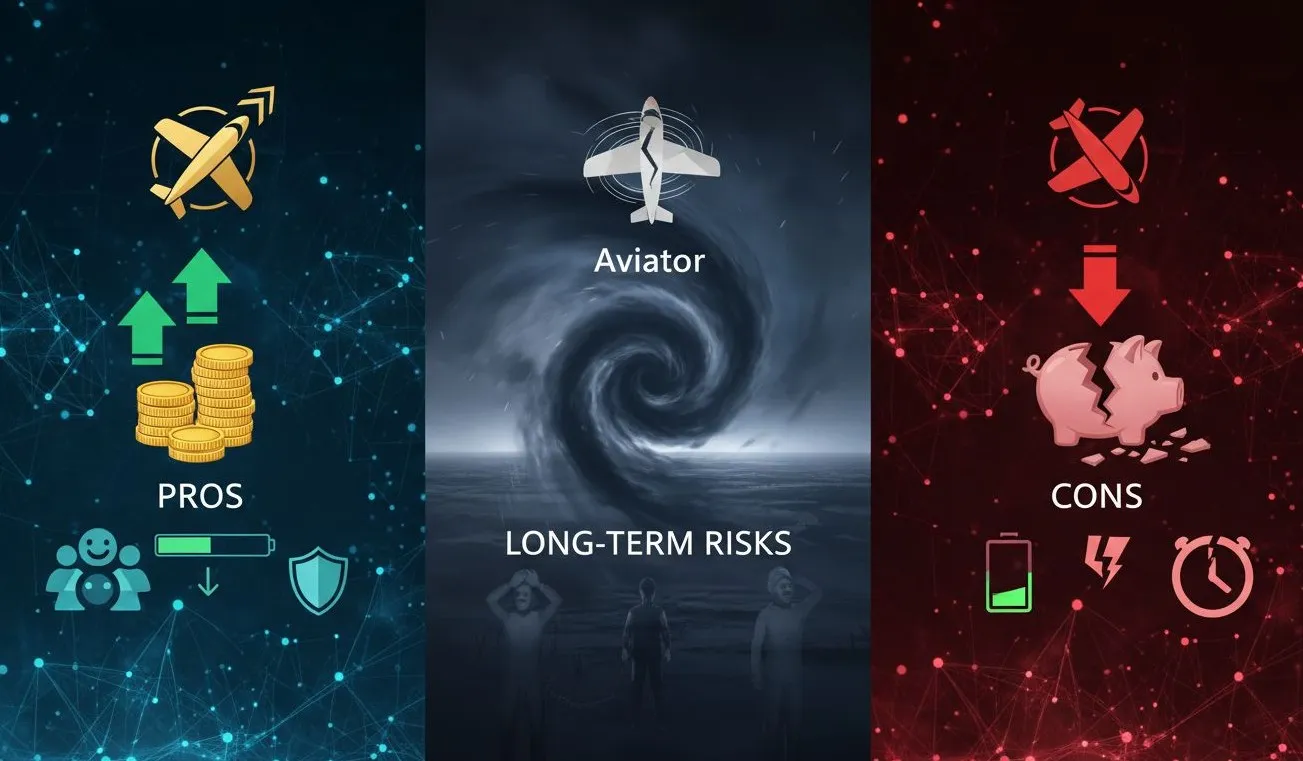
When Playing Aviator Might Make Sense: Weighing the Trade-Offs
Although the risks of long-term play are significant, it doesn’t necessarily mean that every engagement with Aviator is harmful. Under certain controlled conditions, playing Aviator can remain an occasional, manageable form of entertainment — and the key lies in discipline, boundaries, and realistic expectations.
Below is a simple table that outlines different scenarios, helps you reflect on your personal circumstances, and clarifies when Aviator might be reasonably safe — and when it becomes reckless.
| Scenario / Player Profile | When Aviator Might Be Reasonable | When Aviator Is Risky / Not Recommended |
|---|---|---|
| Casual user with disposable income | Small bets, strictly limited budget, treated as fun | Betting more than what’s affordable or using essential funds |
| Playing for entertainment, not expecting profit | Occasional play, aware of risks, realistic expectations | Frequent play aiming for regular income |
| Good control over time and expense | Limits session time and money spent, keeps records | Play sessions that continue beyond planned time or budget |
| Emotional detachment from wins/losses | Wins are a bonus, losses accepted as cost of entertainment | Emotional distress from losses; chasing losses |
| No prior gambling addiction or vulnerability | Balanced lifestyle, healthy coping mechanisms | History of compulsive behaviour or high stress vulnerabilities |
This table shows that Aviator doesn’t have to be categorically off-limits — but only if approached with caution, clear boundaries, and a conscious attitude. For players with discipline and self-awareness, it can be treated as a transient form of leisure. However, for those without safeguards, it has a high potential to spiral into problematic behaviour.
Practical Guidelines Before You Start Playing Aviator
If you decide that Aviator is something you might try — or have tried already — here are a set of practical precautions and reflection points that significantly influence whether playing stays harmless or turns risky.
- Set a strict budget before even opening the game — and treat that money as “entertainment expense,” not investment. Once it’s gone, stop playing.
- Define a time limit as well as a money limit. Playing in short, controlled sessions reduces the risk of impulsive bets and loss-chasing.
- Maintain realistic expectations: view Aviator akin to a lottery or casino — not as a reliable income stream. Accept that most rounds will yield a loss, and treat any win as a rare bonus.
- Avoid playing when emotionally vulnerable (e.g., after a bad day, when stressed or depressed) — gambling under emotional distress increases risk of poor decisions.
- Periodically review your total spending and losses on the game. If you notice losses creeping up or frequent playing, re-evaluate whether it remains harmless fun.
It’s also worth noting that many online platforms promoting Aviator may glamorize wins, depict confident players celebrating big multipliers, or suggest strategies that guarantee success. In reality, none of these claims can overcome the underlying randomness. That’s why, if you ever try Aviator, approach it with a skeptical mindset.
And if you’re looking to explore the game firsthand, you might encounter promotional sites with easy sign-up offers — for example, one widely known landing page is https://aviatorgameapp.com, though encountering such platforms should trigger caution and critical thinking rather than blind enthusiasm.
Balanced Conclusion: Is it Worth it?
After weighing the potential benefits, immediate drawbacks, and long-term risks, the answer to whether you should play Aviator depends heavily on your personal approach and self-discipline. If you treat it as occasional entertainment, stick to small, affordable bets, and maintain a firm boundary between fun money and essential funds — it can remain a low-risk novelty. But the line between casual play and risky gambling is thin: volatility, ease of access, and psychological reinforcement all conspire to make repeated play increasingly dangerous over time.
In short, Aviator is not inherently “good” or “bad” — its impact depends on you. If you’re honest with yourself about your comfort with risk, emotional state, and financial discipline, you might enjoy the game without serious consequence. However, if you lack such boundaries, or begin chasing wins or playing under stress, playing Aviator carries a significant probability of financial loss and potential emotional harm.
Use the insights in this article to reflect on your motivations, set clear limits, and play only with money you can afford to lose. Approach the game with caution — and remember: the odds are structured in favor of randomness, not players.
Conclusion
Playing Aviator can deliver a quick rush, simple entertainment, and the occasional thrill of a win — but beneath its flashy interface lies a structure built around chance and uncertainty. For some, played sparingly and responsibly, it can stay just that: a short-lived diversion. For others, without discipline and boundaries, it’s a path toward repeated losses, regret, and potential addiction. Before you decide to play, weigh your personal circumstances carefully, set clear budgets and time limits, and never treat Aviator as a source of income. Approach it for fun — but always with your eyes open.